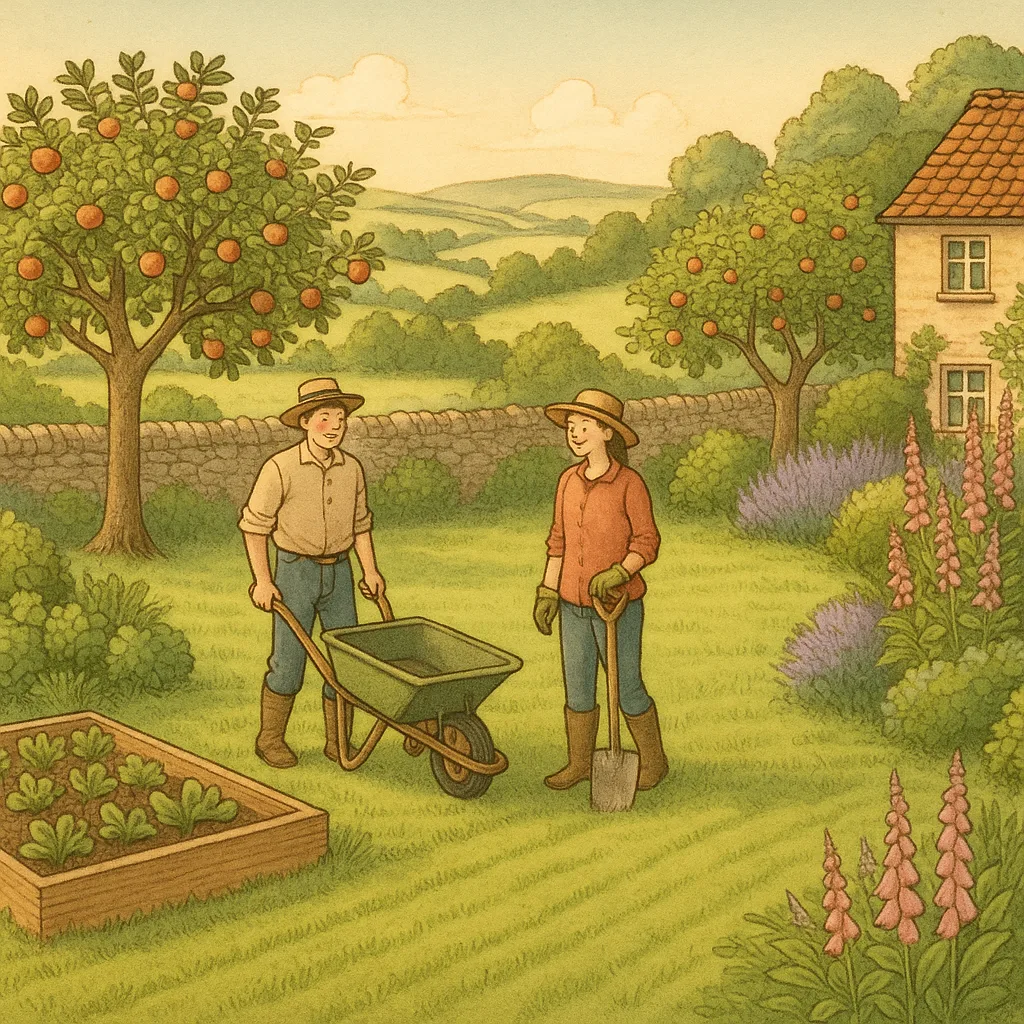
Start with a clear plan
We begin by walking the garden and noting sun patterns, soil types and the best existing features to keep. Large gardens benefit from zoning. Decide where you want lawn for play, areas for entertaining, a vegetable patch and quiet wildlife corners. Mapping the space on paper helps you see where paths, sheds or new beds would make daily life easier. This is where simple decisions pay off over the years.
Simplify maintenance
Big gardens can take hours of upkeep. We look for ways to reduce time spent on routine jobs. Replace narrow, high-maintenance borders with wider, low-care planting. Use gravel or bark paths to cut mowing, and choose perennial plants that fill gaps and suppress weeds. For lawns, consider dividing large areas so only the parts you use are kept short. Proper tools make a big difference too. A good lawn mower, a strimmer for edges, a sharp pair of secateurs and a sturdy fork are our everyday essentials.
Work with mature trees and hedges
Mature trees and hedges give a garden character but also create shade and leaf fall. We advise on light pruning and thinning to improve light levels for borders and lawns. For boundary hedges, staggered planting and staged trimming reduce workload and encourage wildlife. If trees are a concern, we assess safety and suggest minimal intervention to keep the garden healthy and attractive.
Create wildlife-friendly areas
Large gardens are ideal for wildlife. Leaving a wild corner or sowing a native wildflower patch brings bees, butterflies and birds. Planting species such as foxglove, lavender and native hedging like hawthorn supports local biodiversity. Piles of logs and a bird-friendly shrub layer offer shelter. We favour organic approaches to pest control and suggest biological slug control and beneficial insects rather than harsh chemicals.
Make spaces that suit your life
Think about how you use your garden through the seasons. A sunny terrace for summer meals, a sheltered seating area for autumn, and an arranged vegetable area for spring planting all help you enjoy the space. For productive plots, raised beds make planting and harvesting easier on big sites, and we can build raised beds to fit your layout.
Practical scheduling and seasonal work
Break tasks into seasonal chunks so the garden never feels overwhelming. Autumn is for leaf clearing and planting trees. Winter suits major pruning and tool maintenance. Spring is for planting and mulching, while summer is for deadheading and light weeding. We set realistic routines for each month so the workload is steady and manageable.
A large garden can be a source of joy rather than stress. With clear zones, sensible planting and a few well chosen changes you can enjoy a beautiful, wildlife rich space that fits your life.
Contact our team for advice.