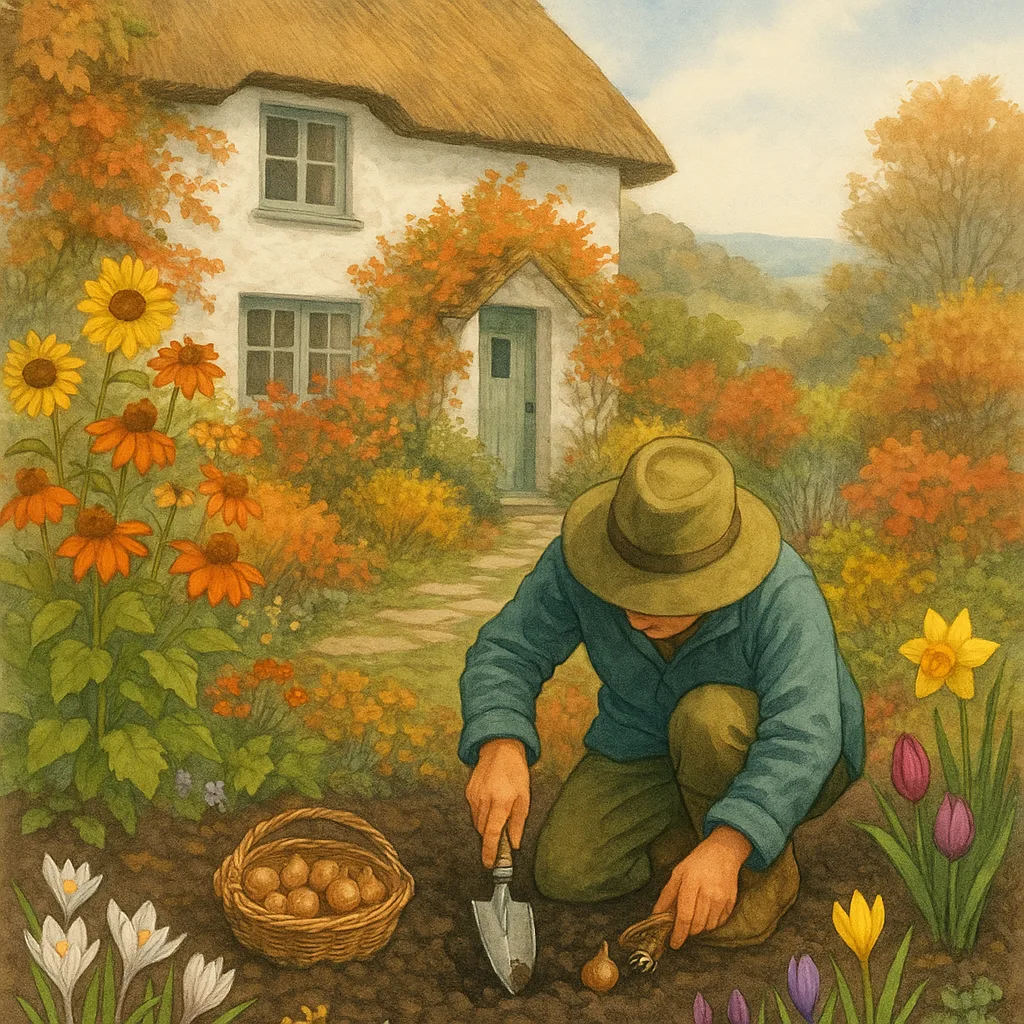
Choose the right bulbs
It's a good idea to choose hardy varieties that are suited to our region. Daffodils and crocus are dependable in damp soils, while tulips often do better in a drier, well-drained spot or in containers. Select bulbs that are firm and dry; avoid any that are soft or mouldy. For a long season of interest, pick a mix of early, mid and late-flowering types so the display moves through spring.Your garden will have months of blooms.
Timing and site preparation
We plant most bulbs in autumn, usually from September to November, once soil temperatures drop but before the ground freezes. Prepare the site by removing perennial weeds and loosening the soil to a depth of about 20–30cm. If drainage is poor, add grit or organic matter to improve structure and avoid waterlogging. Raised beds are ideal for bulbs (
we can build raised beds for you if you need them) to give them the free-draining conditions they prefer.
Planting depth and spacing
You can follow this simple rule of thumb: plant bulbs at a depth of about a half to a third of their height. Small crocus and snowdrop bulbs sit shallowly, while larger daffodils and tulips need deeper planting. Place bulbs pointy end up and space them a little wider than the bulb’s diameter to allow foliage to develop. Planting in drifts (clusters) rather than single rows gives a much more natural, impactful look.
Bulbs in containers
Containers are great to control soil and drainage easily. Use a free-draining compost and place bulbs at the correct depth, keeping taller types nearer the centre or back. We advise grouping bulbs of similar watering needs together to avoid over ot under watering. Move pots to a sheltered spot for the winter, or protect them from prolonged saturation with gravel under the compost and careful siting.
Protection, feeding and aftercare
You can mulch lightly to conserve moisture and reduce frost heave, using an open, organic mulch that doesn’t overly insulate bulbs. Avoid cutting the leaves back while they are still green; bulbs need the foliage to store energy for the following year. A balanced feed applied in early spring as growth starts will help build strong bulbs. For slugs and rodents, we always recommend physical barriers or biological controls rather than harsh chemicals.
Lifting, dividing and naturalising
Lift and divide crowded clumps of bulbs after the foliage dies back once flowering has declined. Many bulbs, like daffodils, naturalise well if left undisturbed for several years. When lifting, let the foliage wither completely before handling, and replant healthy bulbs promptly.
We aim for a reliable, long-lasting spring display through sensible autumn preparation and simple ongoing care. You can always
contact our team for advice.