Planting for Pollinators in Devon
Plant for a sequence of blooms
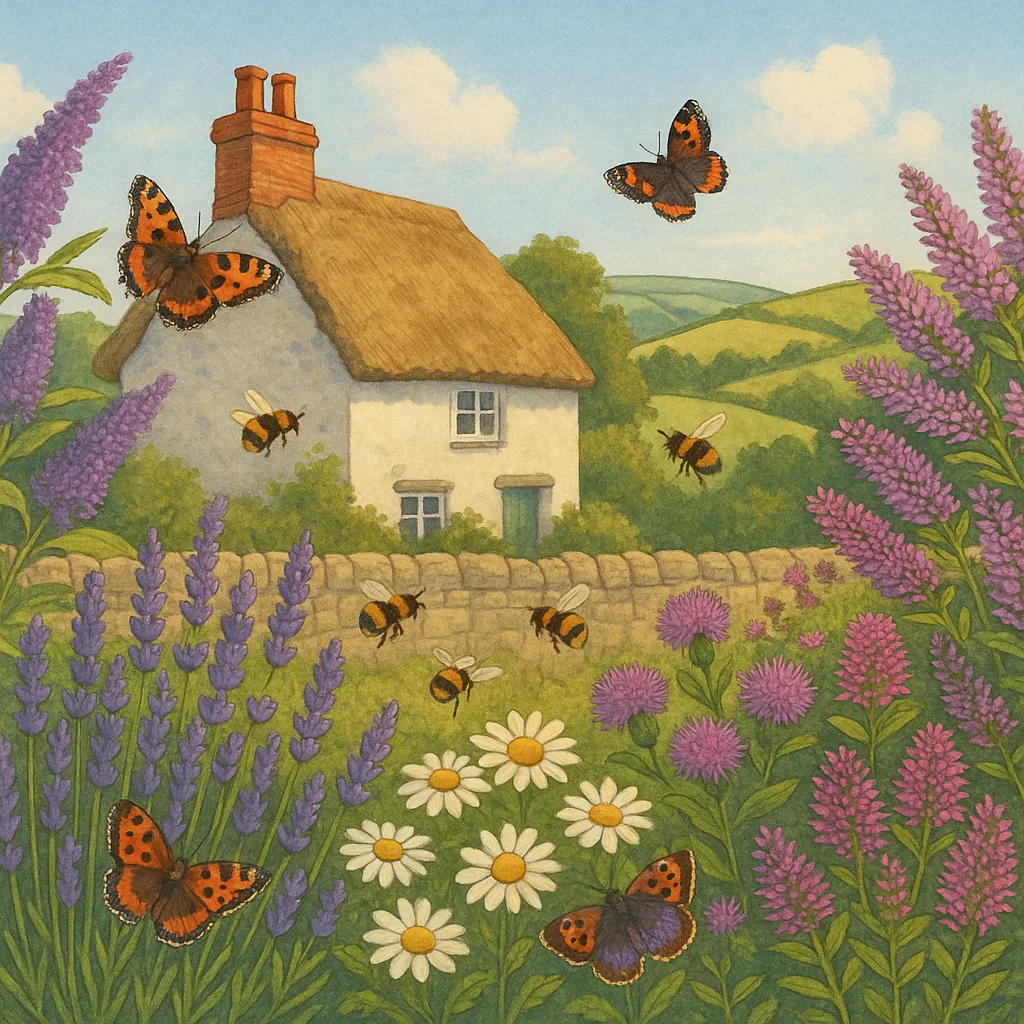
You can plan carefully to provide flowers from early spring until late autumn. Start with spring bulbs and early nectar sources such as camelina and native crocus, then move through to spring-flowering shrubs like heather and gorse that suit many gardens. In summer, plant buddleia, lavender, marjoram, and common knapweed to attract bees and butterflies. For autumn interest, ivy, sedum and hebe are excellent late-season nectar sources. Staggering bloom times keeps pollinators fed across the year.
Choose mostly native and pollinator-friendly plants
We favour native wildflowers where possible: oxeye daisy, yarrow, red campion and bird’s-foot trefoil are brilliant for local insects. These plants often host caterpillars as well as providing nectar. Mix them with well-loved garden plants such as lavender, thyme and rosemary, which are particularly attractive to bees in sunnier spots. Avoid double-flowered cultivars that offer little nectar or pollen.
Create shelter and nesting sites
Pollinators need more than flowers. We make small changes to create nesting and overwintering habitats. Leave patches of bare soil for mining bees, and keep a small log pile or deadwood area for solitary bees and beetles. Plant a mix of hedging and shrubs to shelter insects from coastal winds. A shallow water dish with stones offers drinking sites for thirsty insects on warm days.
Think about the mowing regime
We suggest altering mowing patterns to protect flowering lawns and verges. Letting a patch of lawn go a little longer until flowers like clover and dandelion have finished provides vital food. If you have space, allowing a small area to become a mini-meadow is simple and effective. Cut back only when necessary and avoid tidying everything away in autumn—some stems provide winter homes for moths and overwintering bees.
Planting tips and maintenance
We prepare soil gently and avoid heavy digging where possible to protect ground-nesting species. Mulch sparingly in areas where solitary bees nest in the soil. Prune shrubs after flowering to maintain shape but keep some seedheads and stems through winter. If you’d like structure or clearer beds, we can build raised beds to make planting and maintenance easier.
Keep it chemical-free
We avoid using broad-spectrum pesticides and recommend natural approaches to pest management. Encouraging a diversity of plants and predators usually keeps problems in check. Small changes deliver big results for pollinators and the wider garden ecosystem.
Contact our team for advice.
