Start with a plan
We begin by assessing light, wind and access. Most vegetables need at least six hours of sun. Note where shade falls through the day. Think about water supply and how you will move compost and soil. Keep paths narrow enough to save space but wide enough to reach plants comfortably. Sketch a simple layout. Group taller crops at the north side so they do not shade low-growing plants.
Choose crops suited to Devon
I encourage picking varieties that cope well with our mild winters and moist summers. Leafy greens, spring brassicas, peas, broad beans and many root vegetables do well here. Tomatoes, peppers and courgettes need the sunniest, warmest spot or a sheltered greenhouse. Consider your kitchen habits. Grow what you eat; if you dislike runner beans, don’t plant acres of them.
Soil and bed preparation
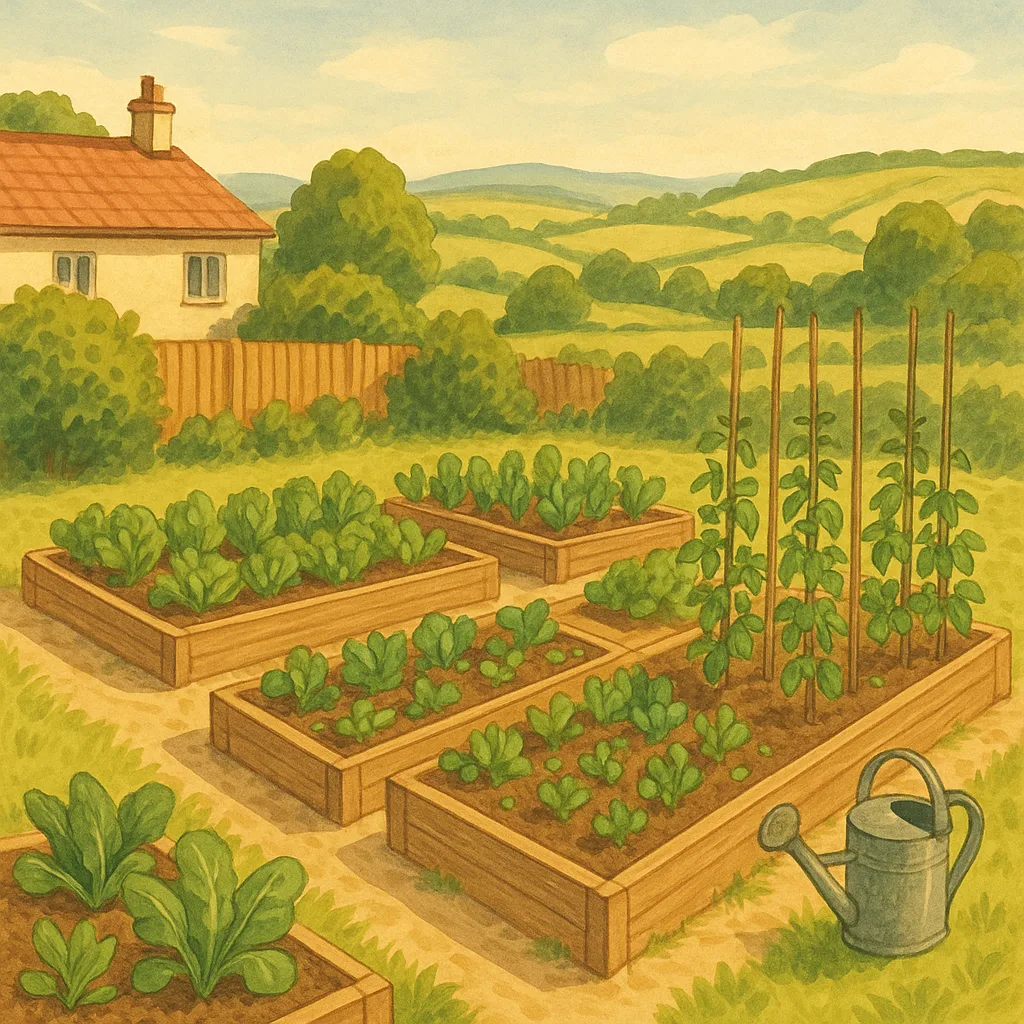
Healthy soil is the foundation. We test soil texture and add organic matter to improve structure and drainage. In Devon clay can be heavy, so compost and well-rotted manure help lighten it. If your soil is very poor or compacted, raised beds or large containers offer a quick route to improvement; we can build raised beds if you prefer. Mulch with organic material to suppress weeds and retain moisture.
Sowing, planting and timing
We always sow hardy crops early and tender crops later. Use a mix of direct sowing and early pot-grown seedlings. Succession sowing keeps harvests coming, sow a few seeds every couple of weeks for crops like carrots and lettuce. Keep a planting diary to track dates and varieties, it helps plan rotations and avoid pests building up in one spot.
Pest management and care
Slugs and snails are a regular challenge here. We favour cultural controls: hand-picking, barriers, traps and encouraging natural predators. Crop covers protect young plants from birds and pests without chemicals. Rotate families of crops to reduce disease pressure. Water in the morning where possible to reduce leaf wetness overnight.
Harvesting and storage
Harvest regularly to encourage production. Store root crops in a cool, frost-free place and freeze or preserve surplus soft fruits and vegetables. Seed saving from open-pollinated varieties helps preserve plants suited to your garden conditions.
Keep it flexible
Gardens change year to year. I recommend starting small and expanding as you learn. Keep simple records and make one change at a time. With attention to soil, timing and pest management you’ll find a layout that works for your household and garden space.
Contact our team for advice.