Choose the right plant
We start by picking species suited to topiary and to our local conditions. In the UK popular choices include yew, hornbeam, beech, privet and holly. Traditional box has been common but can struggle with pest and disease in some areas, so consider alternatives if you have had problems in the past. Choose young, healthy plants with a single stem if you want a standard or a dense bush for balls and cones. Think about growth rate too. Faster growers need more frequent clipping while slow growers give a finer finish with less work.
Planting and early training
Good results begin with a good start. Plant in a well drained position and improve heavy soil with organic matter if needed. Water regularly in the first two seasons while roots establish. For standards use a stake to keep the stem straight and tie lightly so the plant can move a little in the wind. When the plant reaches the first intended shape level, begin training by pinching or short clipping to encourage dense branching. Frames can help beginners keep proportions even when forming complex shapes.
Shaping and pruning technique
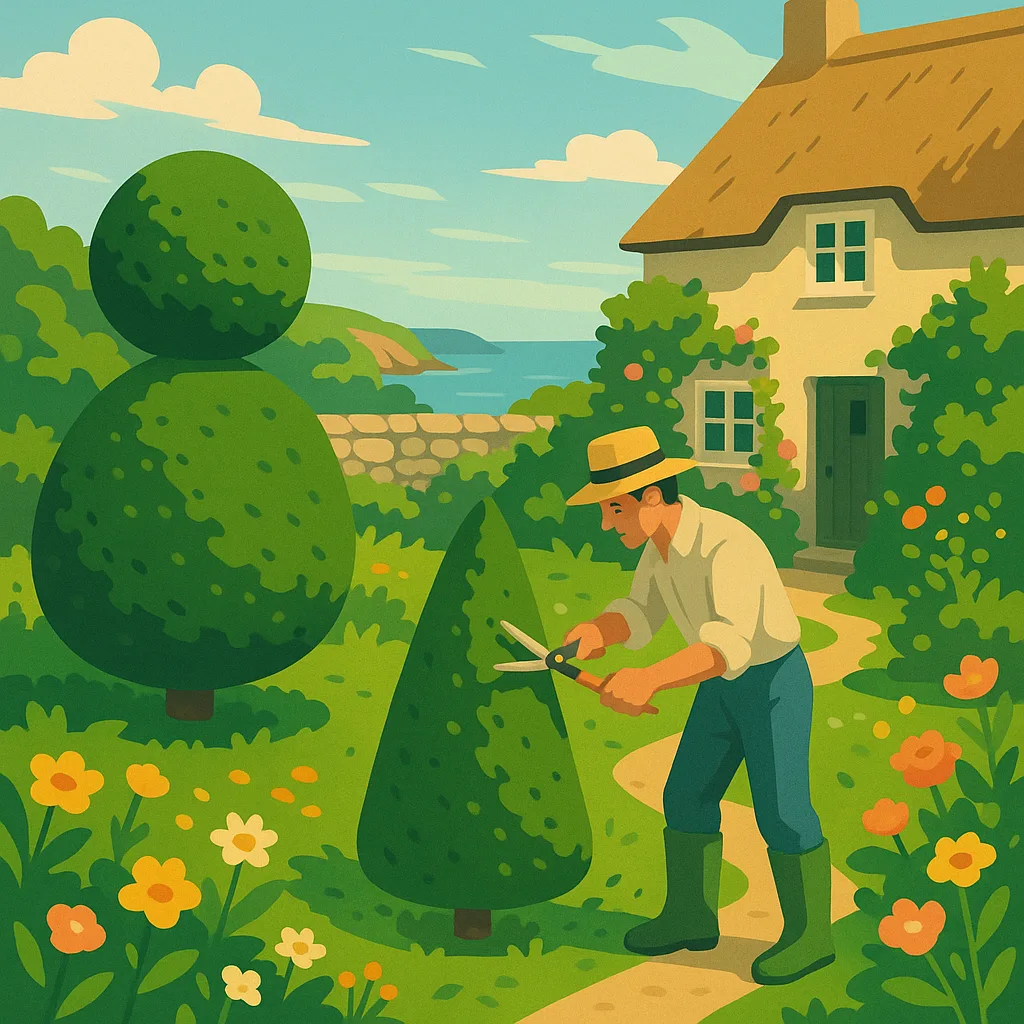
Sharp, clean tools make shaping easier. Hand shears and secateurs give control for detail work. For large jobs a powered trimmer speeds the work but finish edges with hand tools. Clip lightly and often during the growing season to maintain a crisp outline. For most evergreen types we make light trims in late spring and again in mid summer. Reserve stronger structural pruning for late winter or very early spring when growth is minimal. Always cut to a healthy bud or branch and avoid removing large amounts in one session.
Ongoing care and pests
Keep topiary healthy with regular feeding using a balanced fertiliser in spring and mulching to conserve moisture and improve soil. Water in dry spells, especially while containers or newly planted specimens are settling. Monitor for common problems such as leaf damage from pests and signs of fungal disease. Control measures should be cultural and biological where possible, and you should remove affected foliage promptly. For busy gardeners we offer pruning to keep shapes tidy and healthy.
Troubleshooting and long term tips
If shapes become sparse in the centre, allow a period of rest and avoid over pruning the outer growth. Rejuvenation can be gradual; cut back a little each year rather than a heavy reduction. When moving or transplanting allow time for re establishment and avoid heavy shaping in the first year. With patience and simple routines your topiary will become a lasting feature in borders, patios and entrances.
Contact our team for advice.