Choosing seed potatoes
We use certified seed potatoes rather than supermarket tubers. Seed potatoes are sounder and less likely to carry disease. Choose an early variety if you want new potatoes in summer, or a maincrop variety for storing over winter. If your tubers are large, cut them into pieces so each piece has at least one or two eyes. Leave cut pieces to dry for a day or two before planting to reduce rot.
Where to plant
Potatoes prefer a sunny, well-drained spot. Heavy clay can be improved with organic matter such as compost or well-rotted manure added the previous autumn. If you have poor soil or limited space, we can build raised beds to give better drainage and warmer soil. You can also grow potatoes in large containers or sacks with around 20–30 cm depth of compost to start.
Planting
Plant seed potatoes from mid-March to April in most parts of Devon, once the soil begins to warm and it is workable. Dig a trench 10–15 cm deep and space tubers about 30 cm apart, with rows 60-75 cm apart. Cover with soil and keep the soil level until shoots appear. For staggered harvests, plant a few seed potatoes every two to three weeks early in the season.
Care and feeding
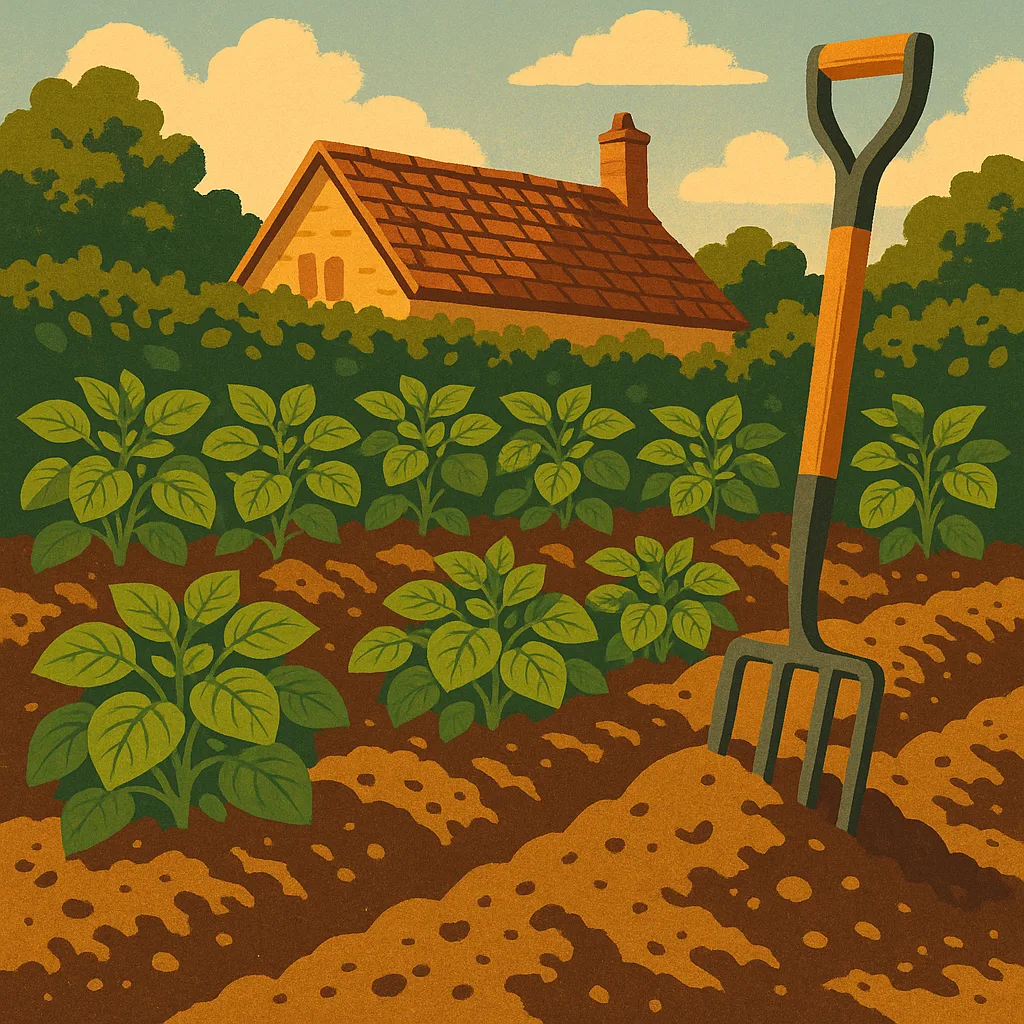
Water regularly during tuber formation, especially in dry spells. We avoid wetting the foliage where possible to reduce disease risk. Once shoots are 15–20 cm tall, begin to draw soil up around the stems, a process called hilling. This protects developing tubers from light and supports the plants. Mulch with well-rotted compost or straw to conserve moisture and suppress weeds. A balanced organic feed during the growing season can help yields if your soil is light.
Pests and disease
Keep an eye out for slug damage on young plants, and use physical barriers or biological slug control if needed. Blight is the main disease concern in the UK good ventilation, sensible spacing and removing heavily affected foliage can reduce spread. Rotating potatoes to a different part of the garden each year reduces the build-up of soil-borne pests and diseases.
Harvest and storage
New potatoes can be lifted when flowers appear or when tubers are finger-sized. For maincrops, wait until the foliage dies back. Dig carefully with a fork to avoid damaging tubers. Leave them to dry in a sheltered spot for a few hours, then brush off soil. Store maincrop potatoes in a dark, cool, frost-free place with good ventilation. Check stored potatoes regularly and remove any that show signs of rot.
If you'd like personalised help,
contact our team for advice.