Hedge Maintenance Tips for Devon Gardens
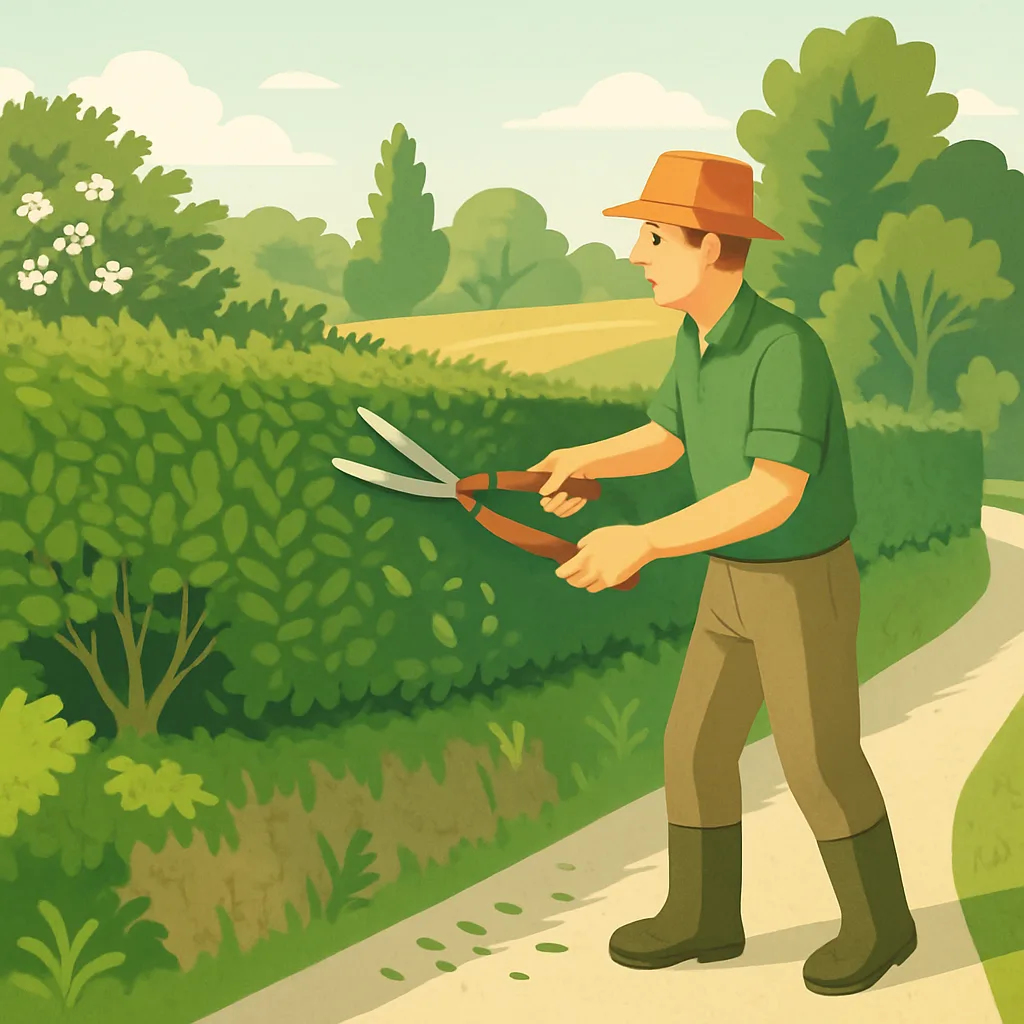
When to trim
We always think about the birds first. In the UK it is best to avoid cutting hedges during the main nesting season from March to August unless absolutely necessary. For many deciduous hedges a hard trim in late winter or very early spring is best before new growth starts. Evergreen hedges such as yew and holly tolerate a light summer trim to tidy shape, usually after the first flush of growth. For fast growing conifers regular light cuts through the summer keep them manageable but avoid cutting back into old wood where new shoots will not form.
How to shape for health
Good shape is more than appearance. We aim for a slightly broader base than the top so light reaches lower stems. This helps avoid bare patches at the base which are common with tall clipped hedges. When shaping take small amounts at a time and step back regularly to check proportions. Never cut wet branches that are heavily laden with soil as this can spread disease and stress the plant. Remove dead or diseased wood back to healthy growth and avoid leaving large stumps where rot can set in.
Tools and safety
Sharp, clean tools make the job easier and reduce damage. For small jobs hand pruners and a folding saw are ideal. For longer runs use a hedge trimmer suited to the size of the hedge, whether battery or petrol powered. Wear sturdy gloves, eye protection and hearing protection if using powered kit. Work from stable ground and use a proper platform rather than extending from an unsafe ladder. If the job is large or the hedge very tall we recommend a two person approach or a professional to ensure safety.
Aftercare and wildlife
Clear up clippings promptly where they might smother new shoots. Recycle trimmings as a coarse mulch after they have started to break down or compost them if appropriate. Water newly planted hedging in dry spells and apply a layer of well rotted organic mulch in spring to conserve moisture and feed roots. It is worth leaving small patches of berry bearing shrubs or rough growth to support birds and insects, and to check for nests before you begin work. As part of our work we offer seasonal maintenance to keep hedges healthy.
We find simple, regular attention beats large, infrequent cuts. A light tidy in summer and a careful prune in late winter will prolong the life of most hedges and keep them looking their best. Contact our team for friendly advice or to arrange a visit.
