Growing Carrots in Your Devon Garden
Site and soil
We always start with soil. Carrots need deep, loose, free-draining soil that is low in stones. If your soil is heavy clay or shallow over hardpan we recommend digging in plenty of well-rotted organic matter or creating deeper soil in a raised bed. For small gardens we can build raised beds to give roots room. Aim for a pH close to neutral and avoid fresh manure which can cause forking and excessive top growth.
Choose the right variety
We choose varieties to suit the site and the season. Short stump-root types suit heavy soils and early sowings. Long tapered types give classic shapes in lighter soil and are ideal for maincrop sowings. Early varieties are ready in eight to ten weeks while maincrop carrots take up to 20 weeks. Mixing early and maincrop gives a steady supply through the year.
Sowing and thinning
We sow carrots where they will grow undisturbed. Sow thin drills 1 to 2 cm deep and cover with fine soil. Keep rows no more than 30 cm apart for ease of weeding. Germination can be slow in cool weather, so be patient and water lightly to keep the seedbed moist. Once seedlings have two true leaves we thin to the final spacing. For small varieties 2 to 3 cm is fine. For maincrop aim for 5 to 7 cm between plants. We reuse thinnings in salads where varieties allow.
Watering and feeding
We water evenly during dry spells to prevent split roots and to encourage steady growth. A mulch of well-rotted organic matter helps retain moisture and suppress weeds. Carrots are light feeders so a general balanced organic feed once early in the season is usually enough. Avoid high nitrogen inputs which favour foliage over root development.
Pests and problems
Carrot fly is the most common pest in the UK. We use physical protection such as fine mesh meshes over frames to keep flies away, crop rotation to reduce pressure and avoid sowing carrots next to last year’s beds. Root forking is usually caused by stones or compacted soil. Check soil before sowing and remove obstacles where possible. Slugs may nibble young leaves so employ cultural controls and a tidy, dry surface to reduce losses.
Harvest and storage
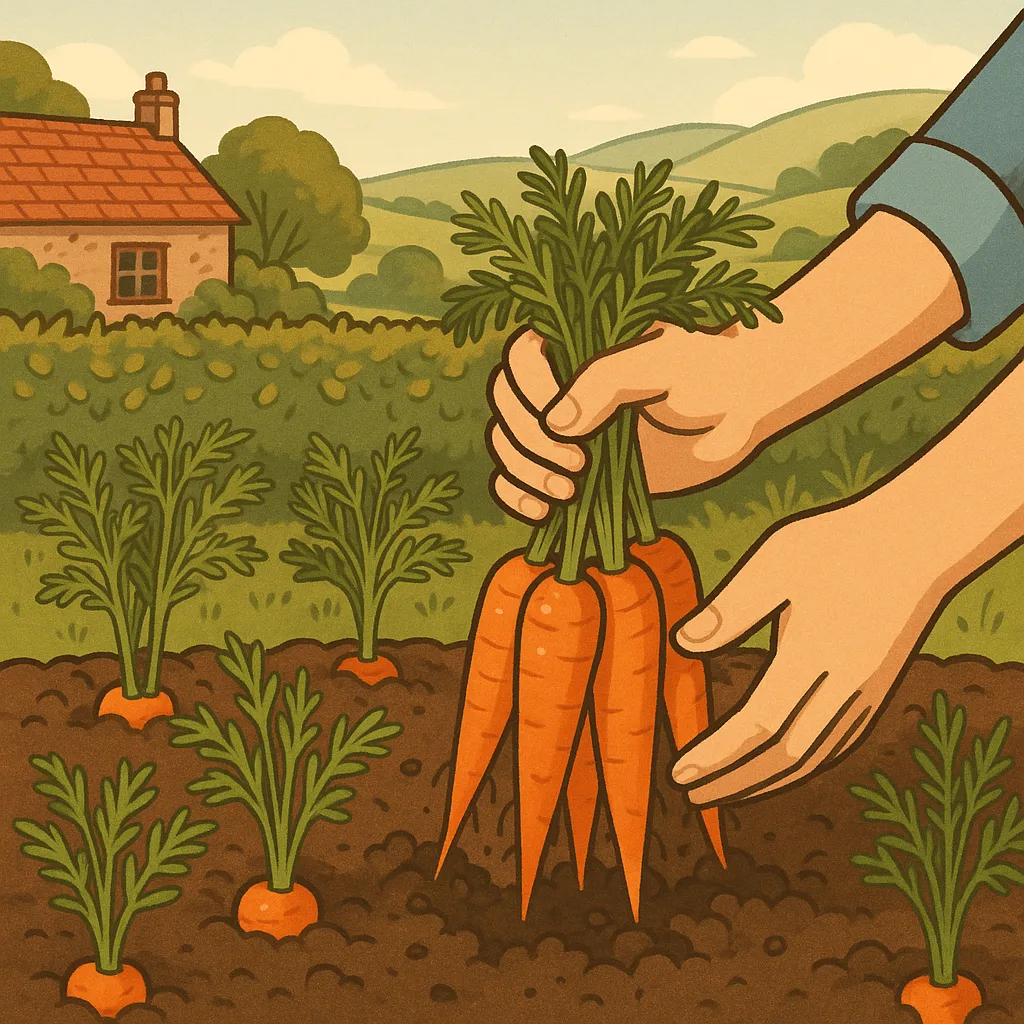
We lift early carrots as needed. For maincrop leave roots to bulk up until needed, then harvest carefully with a fork. Carrots store well in a cool, frost-free shed or in boxes layered with damp sand or composted bark. A light frost can improve sweetness but hard freezes will damage crops so lift those you plan to store before prolonged severe cold.
Growing carrots is a straightforward pleasure that gives great results with a bit of attention to soil and timing. Contact our team for advice.
