How we assess a tree
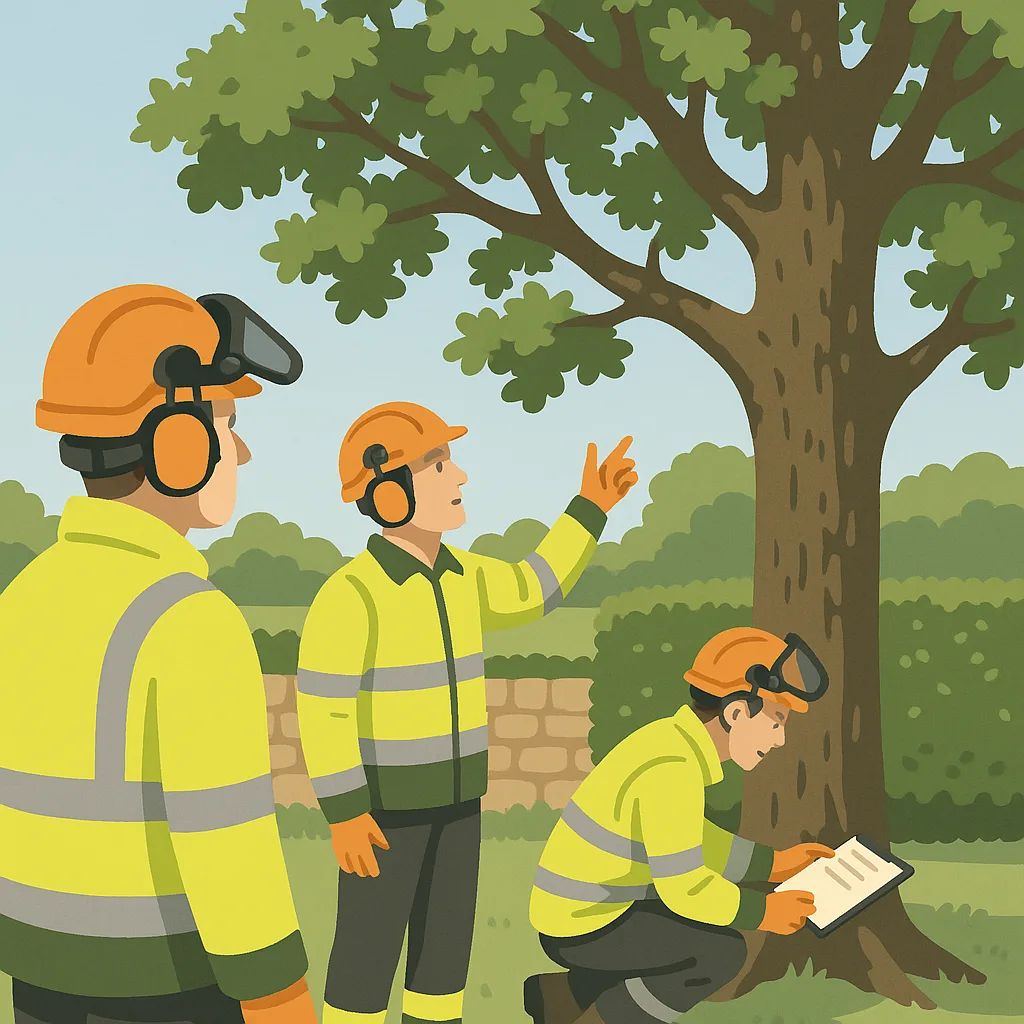
We begin with a visual inspection. We look for decay, cracks, hanging dead wood and root heave. In Devon common species such as oak, ash, sycamore and beech have different behaviours when they fail, so species matters. We check the tree's lean, the weight of crowns and any nearby targets like houses, sheds, power lines or neighbours gardens. If a tree is clearly dangerous we prioritise action. For borderline cases we may monitor the tree or recommend a professional assessment from an arborist with climbing and decay-detection experience.
Legal checks and neighbours
We always check whether a tree is protected. Many properties are subject to Tree Preservation Orders or are in conservation areas and felling may need consent from the local council. We also consider the neighbourly aspects. Trees often sit on boundaries and roots and branches can affect adjoining land. We advise homeowners to talk to their neighbours early and to check planning rules before any work starts.
Planning the job and safety kit
Good planning reduces risk. We establish a clear drop zone and at least two escape routes. We keep the area free of people, pets and vehicles and, if necessary, we put up temporary barriers. Our team wear proper personal protective equipment including helmets with visors, hearing protection, chainsaw trousers and gloves. We use well-maintained petrol or battery chainsaws suitable for the tree size, wedges, ropes and hand tools. We also consider traffic management if felling affects a lane or pavement.
Felling techniques and knowing our limits
There are standard techniques for felling that protect both the operator and the surroundings. We cut a face notch to control direction and then a back cut to release the tree, leaving a hinge of wood to guide the fall. For trees close to buildings, on slopes, or with complex crowns we use ropes and mechanical lowering to bring sections down safely. If the tree is large, hollow, leaning toward structures or tangled with other trees we always recommend a trained arborist with rope access and the right insurance. Safety-conscious homeowners should not attempt large fells themselves.
Aftercare and disposal
Once the trunk is down we section the log for safe removal. We remove dangerous snags, tidy branches and consider stump options. Stumps can be left, rotted down naturally, or ground out with a stump grinder depending on future plans. If replanting is planned we clear enough space and choose suitable species for the soil and location.
If you are unsure about a tree in your garden we can inspect it and advise on the safest approach.
Contact our team for advice.