Choose a system that best suits your space
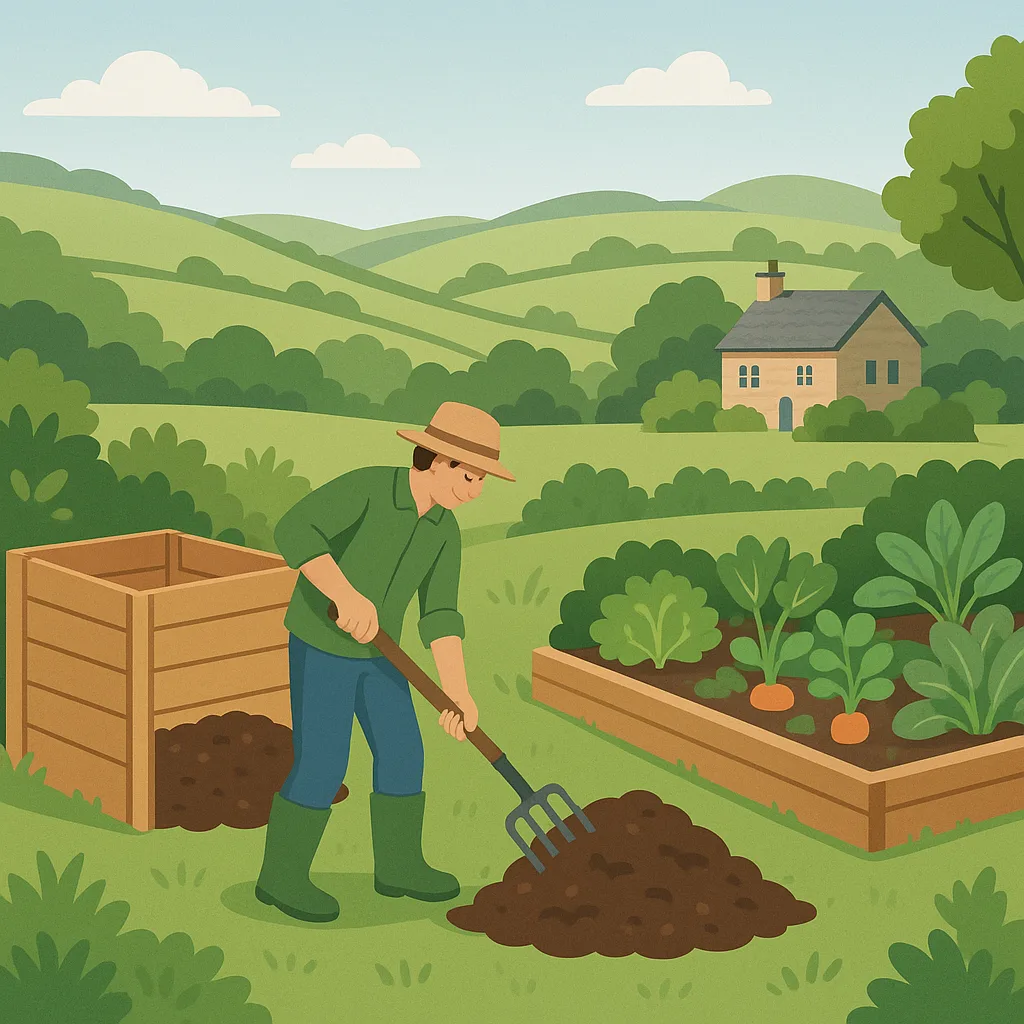
We would advise choosing a compost bin or a simple compost heap depending on your garden. A closed bin keeps the area tidy and warms up faster; an open heap is fine if you have space and don’t mind a more natural look. Place the bin on soil where worms can access it. A shady but sheltered spot helps maintain moisture through warm Devon summers and cold, wet winters.
Build good layers
I prefer a simple layering approach. Start with coarse material such as twigs or straw to help drainage. Alternate thin layers of green material (kitchen scraps, grass clippings, fresh prunings) with brown material (fallen leaves, shredded cardboard, dry straw). Chopping or shredding bigger items speeds things up because microbes can work more easily. Keep your layers no more than a few centimetres thick for even decomposition.
What to add — and what to avoid
We always recommend mixing a variety of materials. Greens give nitrogen, browns add carbon. Definitely avoid adding meat, fish, cooked food or large amounts of dairy. These attract pests and cause odours. Also avoid diseased plant material and invasive weeds that set seed. Coffee grounds, egg shells, vegetable peelings and teabags (paper only) are all good in moderation.
Keep it balanced and moist
A balanced carbon-to-nitrogen ratio is the key. If the heap smells sour, add more brown material. If it’s dry and slow, give it a good watering until it feels like a wrung-out sponge. If you turn the heap every few weeks with a garden fork, it brings air in and speeds up breakdown. If you prefer low a effort option, cold composting works too — it just takes longer and needs less turning.
Make it faster if you want
We often speed up compost by chopping material, keeping the heap moist and turning more frequently. Hot composting (building a larger, insulated heap) produces usable compost in a few months. For smaller gardens, a contained bin with good aeration is a great compromise. Adding finished compost or a handful of garden soil can introduce helpful microbes and worms to a new heap.
Use finished compost well
Once you have the finished compost, you can use it as a mulch around shrubs, mix it into potting mixes for container-grown tomatoes and veg, or turn it lightly into borders to improve the structure. A couple of centimetres spread over beds in spring helps retain moisture and adds nutrients slowly. If you want
neat raised vegetable beds, we can build them, and top them with your own compost for a great start. An easy way to get your vegetables on the go.
Keep it friendly for neighbours and wildlife
Always keep your compost bins tidy, avoid adding problem foods, and site compost away from boundaries to prevent issues. If wildlife is a concern, choose a secure bin with a lid. In town or village gardens, good composting is about being tidy as well as effective.
If you'd like tailored advice or help to
build and maintain your compost heap or bin, contact our team.