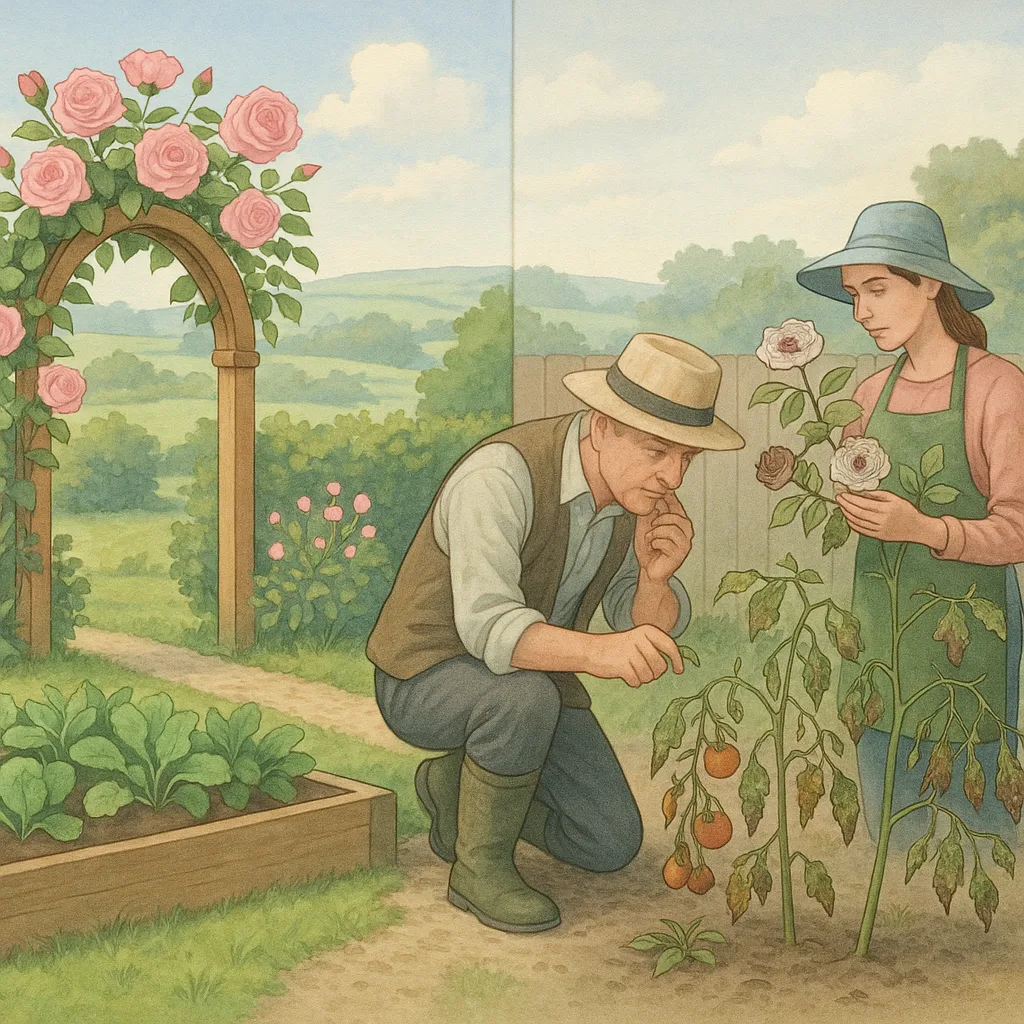
Recognising common symptoms
We start by looking for obvious signs. Powdery mildew shows as a white dusty coating on leaves and new shoots. Blackspot on roses appears as dark blotches and yellowing foliage. Rust shows orange or brown pustules on the undersides of leaves. Grey mould, or botrytis, creates soft brown patches and a fluffy grey growth on flowers and fruit. For root problems you might see stunted growth, yellowing leaves and poor drainage. Early detection makes treatment far easier and reduces spread across the garden.
Practical, low-impact responses
It's good to consider cultural measures first. Improving air circulation by pruning and spacing plants reduces fungal spores. Removing and composting (or disposing of) badly infected material stops re-infection. Avoiding overhead watering helps leaves stay dry; water at the base of plants instead. Good soil structure and drainage prevent waterlogging and root rot. If raised beds suit a particular border, we can build raised beds to lift sensitive plants out of heavy, wet soil. Clean tools between cuts and disinfect after working on infected plants to avoid moving disease around.
Seasonal care and prevention
Keep an eye on seasons. In spring we remove winter debris and tidy crowns so air can move through the plants. Early thinning of congested shoots prevents many summer problems. For vegetables, rotating crops and not planting tomatoes and potatoes in the same spot each year reduces blight risk. Mulching with well-rotted organic matter helps retain moisture in dry months but avoid piling mulch against stems which can encourage rot.
Biological control and encouraging balance
We always favour encouraging natural predators and a healthy ecosystem. Attracting birds and beneficial insects helps reduce pests that can weaken plants and make disease worse. For slugs and snails we use biological slug control and physical barriers rather than harmful chemicals. A thriving soil biology also supports plant health, so regular organic feeding and avoiding excessive nitrogen helps plants resist infection.
When to seek professional help
Some diseases need expert diagnosis, especially persistent problems like honey fungus or trunk canker on fruit trees. If a whole shrub or tree is failing despite cultural care, we can assess whether removal, specialist treatment or planting a different species is the best option. We always aim to advise on the least harmful approach that protects the wider garden.
If you need tailored advice, a plant health check or help with seasonal maintenance,
get in touch with our team for practical, friendly support.